
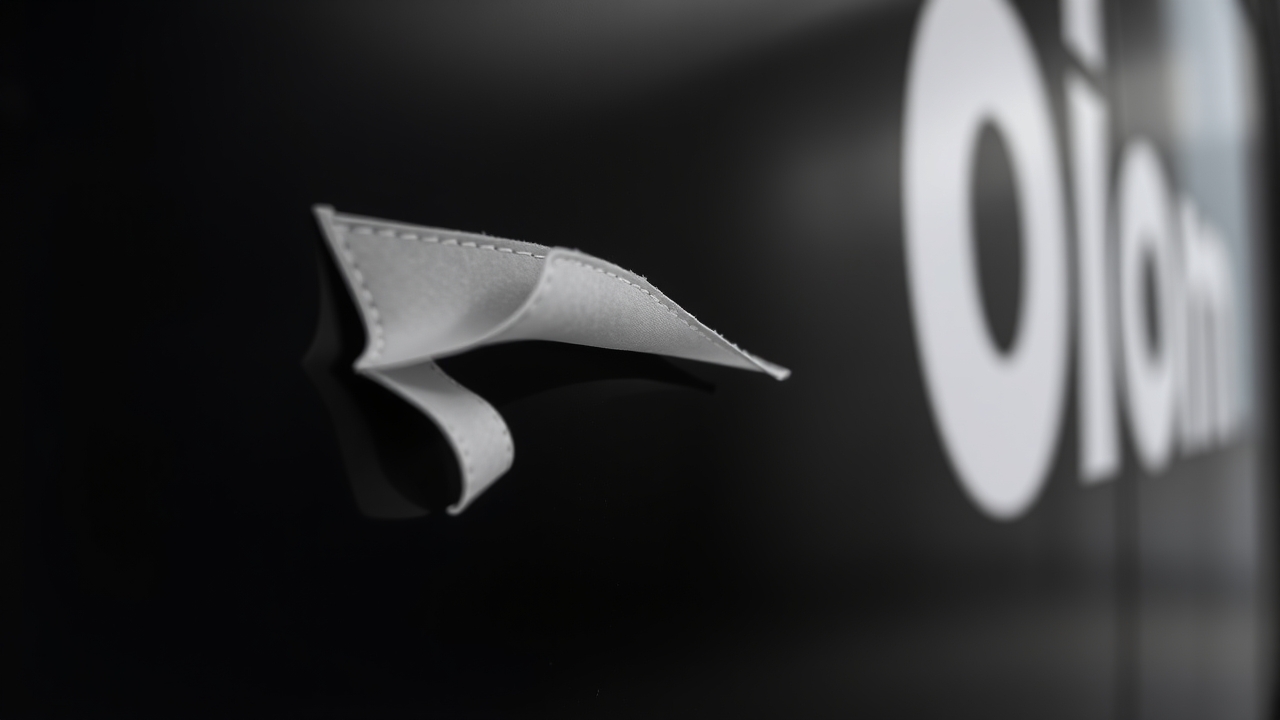
Edge lifting is the most common failure mode for vehicle vinyl. The center of a letter bonds tight while the perimeter starts to curl, flag in the wind, or catch grime. Vinyl lifting at edges is almost always fixable before it becomes a full peel, but the window is narrow. Here is how to diagnose it and fix it fast.
Why Vinyl Lifting Edges Happens First
The edge of a cut vinyl letter is the most mechanically stressed point on the installation. The adhesive there is exposed to air, moisture, and wind shear with no lateral support. The vinyl film wants to return to its original flat shape (this is called memory), and the adhesive at the edge is the first point where that tension wins.
Several forces work together to peel edges:
- Wind shear at highway speed. At 65 mph, air pressure on an edge that sticks up even 1 mm is enough to start peeling. Once the edge lifts slightly, airflow gets underneath and the peel accelerates.
- Thermal cycling. Temperature changes cause both the vinyl and the vehicle substrate to expand and contract at different rates. This flex is highest at the perimeter where the vinyl terminates.
- Moisture intrusion. Rain and car wash water that seep under a lifted edge carry road salt, soap, and chemicals that degrade the adhesive behind the lift line. The clean area becomes contaminated from the inside out.
- Contamination under the edge at installation. Wax, silicone, or even transfer tape residue at the letter perimeter prevents the adhesive from bonding at the edge during installation. The center bonds well; the edge never did.
Diagnosing Why Your Edges Are Lifting
Before choosing a fix, identify the pattern of the lift. This tells you the cause:
| Pattern | Likely Cause |
|---|---|
| Bottom edge only, horizontal letters | Wind shear during highway driving; gravity on aged adhesive |
| All four sides, uniformly | Contamination at installation; wrong film grade for the surface |
| One specific corner only | Impact damage; localized contamination; squeegee missed that corner |
| Edge lifting and adhesive is yellow/brown | Adhesive degradation from UV or chemical exposure; film past service life |
| Edge lifting near rivets or panel seams | Surface topography; adhesive could not bond across the gap |
Fix Methods for Vinyl Lifting Edges
Method 1: Heat and Re-Press (Fresh or Minor Lifts)
If the lifting edge is still flexible (not brittle), and the adhesive underneath looks clean and intact (clear or slightly yellow but not brown), heat and re-pressing often restores the bond without any additional products.
Process: warm the lifted edge with a heat gun at 150 to 170 degrees Fahrenheit (about 6 inches away, medium speed) for 5 to 8 seconds. Do not heat so long that the vinyl becomes floppy. While the adhesive is warm, press the edge firmly down with your thumb, starting from the corner and working inward. Hold pressure for 20 to 30 seconds while it cools. Finish with a firm squeegee pass outward from center toward the edge.
This works reliably when the adhesive is not contaminated and the lift is recent (within a few weeks).
Method 2: Edge Adhesive Application
When the original adhesive has degraded or the edge lift is older, an auxiliary adhesive re-bonds the edge. Rapid Tac Rapid Remount is designed for exactly this. Apply a thin bead with a toothpick under the lifted edge, press flat, and heat with a heat gun for 10 seconds while holding pressure. Let cool fully before the vehicle moves. Wipe away any squeeze-out immediately with isopropyl alcohol.
An alternative for tight budgets: a small amount of 3M Super 77 spray adhesive applied to the underside of the lifted section. Spray onto a piece of wax paper, then use that to dab onto the vinyl underside. This is less precise than Rapid Remount but works.
Method 3: Trim and Re-Edge
On letters where the edge is contaminated or the adhesive is yellowed, the cleanest repair is trimming the contaminated edge back slightly with a sharp blade and re-adhering. This shortens the letter slightly but is nearly invisible on most fonts. Use a fresh single-edge razor blade and a straight edge, remove a sliver (1 to 2 mm) of the contaminated border, then apply edge adhesive to the fresh cut.
Making the Repair Hold Long-Term
Any edge repair needs to address the root cause or the lift will return. After re-pressing or applying edge adhesive:
- Apply a clear vinyl-compatible sealant (like Rapid Tac or a thin bead of clear vinyl adhesive) along the entire perimeter of the repaired letter. This pre-empts the next lift.
- If the vehicle goes through automated car washes, switch to touchless washes for at least 2 weeks after the repair to let the adhesive cure.
- Advise drivers to avoid directing pressure washers at letter edges during cleaning.
Preventing Edge Lifting at Installation
The best fix is not needing one. These steps at installation time dramatically reduce edge lifting over the life of the lettering:
- Post-heat the entire installation. After all letters are down, run a heat gun over each letter and squeegee firmly outward to the edge. This final pass drives adhesive into the substrate at the perimeter and eliminates the micro-voids that eventually become lift points.
- Apply edge sealer proactively. A thin bead of clear sealant along each letter perimeter immediately after installation is standard practice in professional sign shops. It takes 3 extra minutes per vehicle and can add 2 to 3 years to edge life.
- Do not over-cut the masking tape. If using transfer tape, make sure it does not overlap onto the area where the letter edge bonds. Transfer tape residue on the substrate is a common cause of edge contamination.
- Use high-tack or aggressive-adhesive film for rough or riveted substrates. Standard adhesive film on corrugated or riveted panel seams will lift at edges much faster than high-tack variants designed for difficult surfaces.
For full step-by-step installation guidance that includes edge prep, see our article on how to apply vinyl letters to truck doors.
Real-World Fleet Scenarios
Edge lifting is especially common in two fleet situations we see frequently:
Delivery Vans on Highway Routes
Vans running interstate routes at 70 mph put constant wind shear on letter edges. We recommend high-tack Oracal 651 or cast vinyl for any fleet that does significant highway mileage, and proactive edge sealing at installation. A fleet manager in Ohio called us about edges lifting on 12 vans after 14 months. The installation was fine (they used Oracal 651), but no edge sealing had been done. Adding Rapid Remount and sealant to the remaining lift points resolved it; the fleet went another 3 years without recurring issues.
Vehicles in Salt-Belt States
Road salt in Great Lakes and Northeastern states is particularly corrosive to vinyl adhesive edges. If a letter edge lifts even a fraction of a millimeter, salt water from road spray gets under the edge and begins degrading the adhesive from the inside. Aggressive edge sealing at installation is not optional in these climates; it is standard practice.
Frequently Asked Questions
Can I use super glue to fix lifting vinyl edges?
Super glue (cyanoacrylate) can bond vinyl to a vehicle surface, but it is brittle and does not flex with the thermal cycling that vehicle panels undergo. It will often crack or pop off within a season. Vinyl-compatible adhesive like Rapid Remount or 3M Super 77 is flexible and designed for this use. Super glue is a last resort, not a first choice.
My edges lift every time. Why does this keep happening?
Recurring edge lifting on the same vehicle usually points to surface contamination that was never fully addressed. Silicone-based protectants (ArmorAll, many car waxes) are the most common culprit. Silicone is almost invisible on the surface and very hard to fully remove. Multiple aggressive wipes with isopropyl alcohol (91 percent or higher) before installation, followed by a denatured alcohol wipe, is the only reliable way to eliminate silicone contamination before vinyl goes on.
Does matte vinyl lift at edges faster than gloss?
Not inherently. Edge lift resistance comes from the adhesive, not the face film. Matte and gloss versions of the same product line use the same adhesive system. For a full comparison of how matte and gloss vinyl differ in other ways, see our article on matte vs. gloss vinyl finishes.
How long after edge repair can the vehicle go through a car wash?
Wait at least 48 hours before any car wash exposure after an edge repair. The adhesive used in a Rapid Remount repair reaches full cure in about 24 hours at 70 degrees Fahrenheit, but the additional 24-hour buffer accounts for cooler temperatures or less-than-ideal conditions. Touchless car washes are lower risk than brush washes for repaired edges.
Should I remove the whole letter or just fix the edge?
If less than 25 percent of the letter perimeter is lifting and the adhesive on the lifted section looks intact (clear, not yellow-brown), an edge repair is appropriate. If most of the edge is lifting, if the adhesive is visibly degraded (brown, gummy, or brittle), or if the letter is significantly faded, replacing the letter is the better long-term choice.
Does applying vinyl to black vehicles cause more edge lifting?
Dark vehicle surfaces get hotter in sunlight, which accelerates adhesive softening and thermal cycling. This increases edge lift risk over time compared to the same vinyl on a white vehicle. On dark-colored fleet vehicles, cast vinyl is preferred over calendered because cast vinyl is more dimensionally stable under heat. Edge sealing at installation is especially important on dark vehicles.
Next Steps
If edge lifting has gotten past the point of a quick repair, or your lettering is simply past its service life, Hoosier Decal cuts replacement letters from Oracal 651 and 3M cast vinyl with the same-day turnaround for most orders. We ship to all 50 states from our Indiana facility. Visit create vinyl lettering to spec out your replacement set, or upload your artwork for custom logo lettering.
