
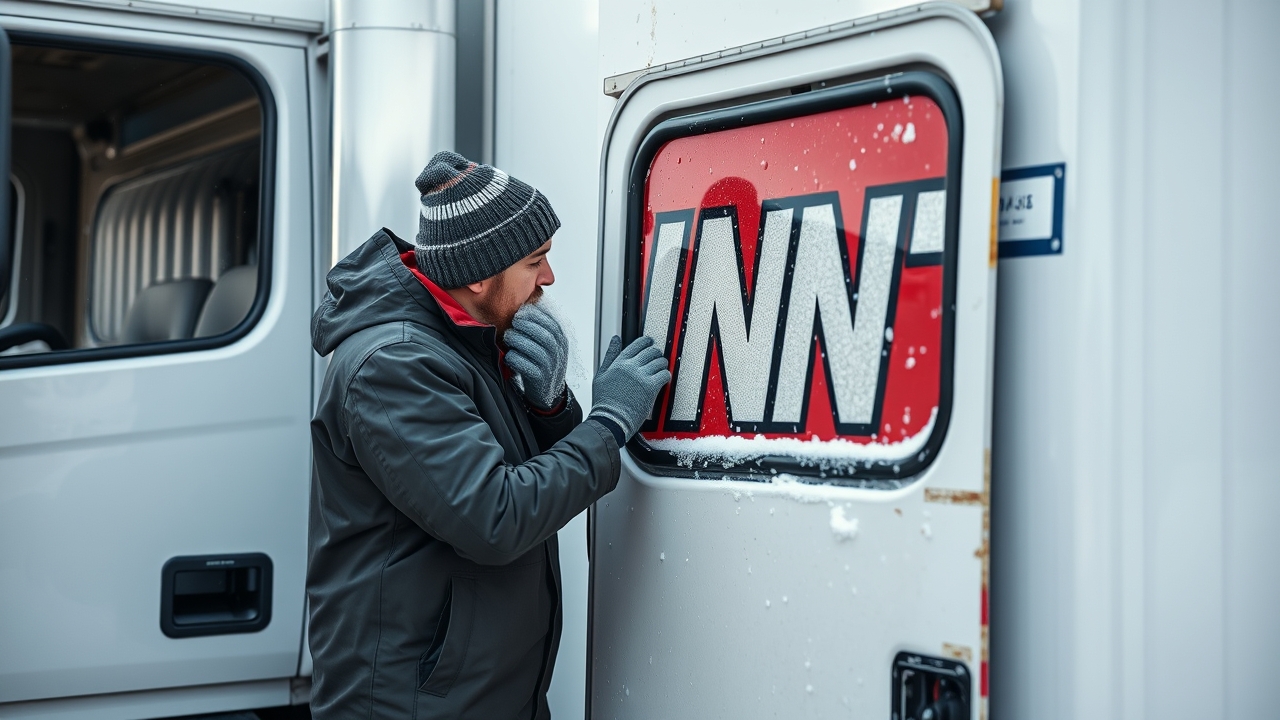
We get more calls about failed vinyl installations in November and March than any other months. Cold weather vinyl application is one of the most misunderstood parts of vehicle lettering, and it trips up experienced installers who know their stuff in warm months. The rules are different below 50 degrees Fahrenheit, and ignoring them produces predictable, expensive failures.
Why Cold Weather Vinyl Installations Fail
Pressure-sensitive acrylic adhesive on vinyl film is temperature-dependent in a fundamental way. Below about 50 degrees Fahrenheit, the adhesive changes phase from a soft, flowable material to a stiff, non-conforming one. It can no longer flow into the micro-texture of the substrate surface, so instead of bonding at a molecular level, it sits on top of the high points of the surface and bridges over the valleys.
The result looks like it bonded at installation. But the bond is superficial. When the vehicle heats up the next day, the adhesive becomes fluid again, and gas pockets trapped in the surface texture expand. Bubbles appear. Edges lift. What looked like a clean installation at 40 degrees reveals its problems at 70 degrees.
The Film Itself Gets Brittle
At or below freezing, PVC vinyl films become stiff and lose their conformability. Trying to squeegee cold vinyl over a curved door panel or around a rivet causes micro-fractures in the film. These are invisible to the naked eye at installation but become visible as hairline cracks within a few weeks of UV exposure and thermal cycling. Some cold installations peel as a sheet because the film fractured along the adhesive layer rather than the face film.
Temperature Rules for Vinyl Installation
These are the actual thresholds that Oracal and 3M publish for their films:
- Below 40 degrees Fahrenheit (substrate surface): Do not install. Period. Adhesive failure is near-certain.
- 40 to 50 degrees Fahrenheit: Technically possible with aggressive pre-heating of the substrate, but results are unreliable. High risk of bubble and edge failure.
- 50 to 60 degrees Fahrenheit: Marginal zone. Can work with proper surface pre-heating and immediate post-heat activation. Not ideal.
- 60 to 80 degrees Fahrenheit: Optimal range. Adhesive flows well, film is pliable, bonds are predictable.
- Above 95 degrees Fahrenheit: Adhesive activates too quickly, causing bubbles and stretch. Early morning installation in summer is preferred.
Critical note: these temperatures refer to the substrate surface, not the air temperature. A vehicle parked in a 50-degree garage with the door open on a 30-degree day may have surface temperatures of 35 to 40 degrees. Always measure the panel surface with an infrared thermometer before installing.
Indoor Installation: The Right Way to Do Cold Weather Vinyl
Moving the installation indoors solves the core problem. Bring the vehicle into a heated space and allow panels to warm to at least 60 degrees, typically 2 to 4 hours for a vehicle parked outdoors in cold weather. The vinyl roll needs to acclimate too; bring it inside with the vehicle. Do not warm film with a heat gun; uneven heating causes stretch and distortion. Room temperature acclimation is the right method.
When You Must Install Outdoors in Cold Weather
Sometimes there is no choice. A fleet vehicle needs lettering and the only option is a parking lot in November. Here is how to manage it:
- Pre-heat the panel aggressively. Use a heat gun to bring the substrate surface to 70 degrees Fahrenheit. Check with an infrared thermometer. The surface cools fast, so work in small sections and re-heat as you go.
- Work section by section. Do not peel a large panel at once. Warm a small area, apply the letter, squeegee, then move to the next. Cold air drops surface temp within 30 to 60 seconds.
- Post-heat immediately. Right after each letter, heat it again to 150 to 170 degrees and squeegee firmly. This is the most critical step; it activates adhesive that the cold surface may not have fully bonded.
- Use cold-rated application tape. Standard tape becomes stiff below 50 degrees. R-Tape AT65 grips more reliably in cold conditions.
- Shield from wind. Parking the vehicle against a building wall reduces wind chill at the work surface significantly.
Cold Film and Film Brittleness: What to Watch For
If the film was stored in a cold space, do not install until it has fully warmed. Signs it is too cold: it cracks or snaps when flexed, the backing paper separates with a crackling sound, the film springs back from curved surfaces, or bubbles appear immediately after squeegeeing. Stop and let it warm to room temperature. Forcing cold vinyl causes irreversible damage.
Diagnosing a Cold Weather Installation Failure
If a vehicle comes back with bubbles, lifting edges, or cracking vinyl after a cold installation, the failure pattern reveals the cause:
- Bubbles across the entire letter: Cold substrate prevented adhesive flow. The adhesive layer never bonded fully.
- Edges lifting within 30 days: Adhesive never activated at the perimeter; cold air reached edges first.
- Hairline cracks in the film: Film was too cold and micro-fractured during squeegee application.
- Film peeling as a sheet with adhesive still on it: The adhesive-substrate bond never formed at all.
For repair techniques that apply after cold weather failure, see our companion articles on vinyl bubbles after application and vinyl lifting at edges.
| Surface Temp | Risk Level | Recommendation |
|---|---|---|
| Above 60 degrees F | Low | Normal installation process |
| 50-60 degrees F | Moderate | Pre-heat substrate; aggressive post-heat |
| 40-50 degrees F | High | Indoor installation strongly preferred |
| Below 40 degrees F | Do not install | Reschedule or move vehicle indoors |
Frequently Asked Questions
Can vinyl installed in cold weather be saved, or does it need to be redone?
If the installation was done in marginal cold (50 to 55 degrees) and the film is still intact without cracking, aggressive post-heating (heat and squeegee the entire installation) within the first 24 to 48 hours can sometimes activate the adhesive enough to create a durable bond. If the film cracked, bubbles are widespread, or edges are already lifting, removal and reinstallation is the right answer. Patching a failed cold-weather installation rarely lasts.
Does cold weather affect vinyl lettering that is already installed?
Already-installed vinyl generally handles cold weather well once the adhesive has cured (typically 48 to 72 hours after installation at normal temperatures). The film may become slightly stiffer in extreme cold, but it does not peel or bubble simply from being cold after a successful installation. Cold weather causes problems at the installation stage, not during normal service.
What is the best time of year to install vehicle lettering?
Late spring (May-June) and early fall (September-October) are ideal in most of the continental United States. Temperatures are in the 60 to 80 degree range, humidity is reasonable, and you avoid the extreme heat of summer (which causes its own issues above 95 degrees). In the South, fall installations are preferred; in the upper Midwest and Northeast, late spring is often best.
Can I use a heat lamp instead of a heat gun for winter installation?
Yes, an infrared heat lamp can pre-warm a vehicle panel very effectively for cold weather installation. It heats the surface more evenly than a heat gun and you can set it up to maintain temperature while you work. Place it 12 to 18 inches from the panel surface and allow 5 to 10 minutes to warm the panel to target temperature. Measure with an infrared thermometer to confirm.
Does cold weather affect the application tape, not just the vinyl?
Yes, significantly. Standard paper-based application tape becomes stiff and loses tack in cold conditions, making it difficult to transfer vinyl cleanly from backing to vehicle. Plastic application tapes (like R-Tape 4075 or AT65) maintain flexibility in cold better than paper tapes. If you are regularly doing cold-weather installations, switching to a cold-rated application tape is worthwhile.
My vinyl was fine through winter but started peeling in spring. Is that a cold weather failure?
Yes, this is a very typical cold weather installation failure pattern. The adhesive never fully bonded due to cold substrate temperatures at installation. Through winter, the vehicle was not driven at high speed and the adhesive stayed semi-frozen. Once spring temperatures arrived, the adhesive softened, the micro-voids became active, and bubbling or edge lifting appeared. The root cause was the cold installation months earlier, not anything that happened in spring.
Next Steps
If cold weather has claimed your current lettering and you need a replacement set, Hoosier Decal ships Oracal and 3M exterior vinyl lettering to all 50 states from our Indiana facility. We have been cutting lettering through Indiana winters since 2003, and we build our installation instructions with cold-climate customers in mind. Visit create vinyl lettering to order your replacement set, or upload your artwork for custom logo work.
