
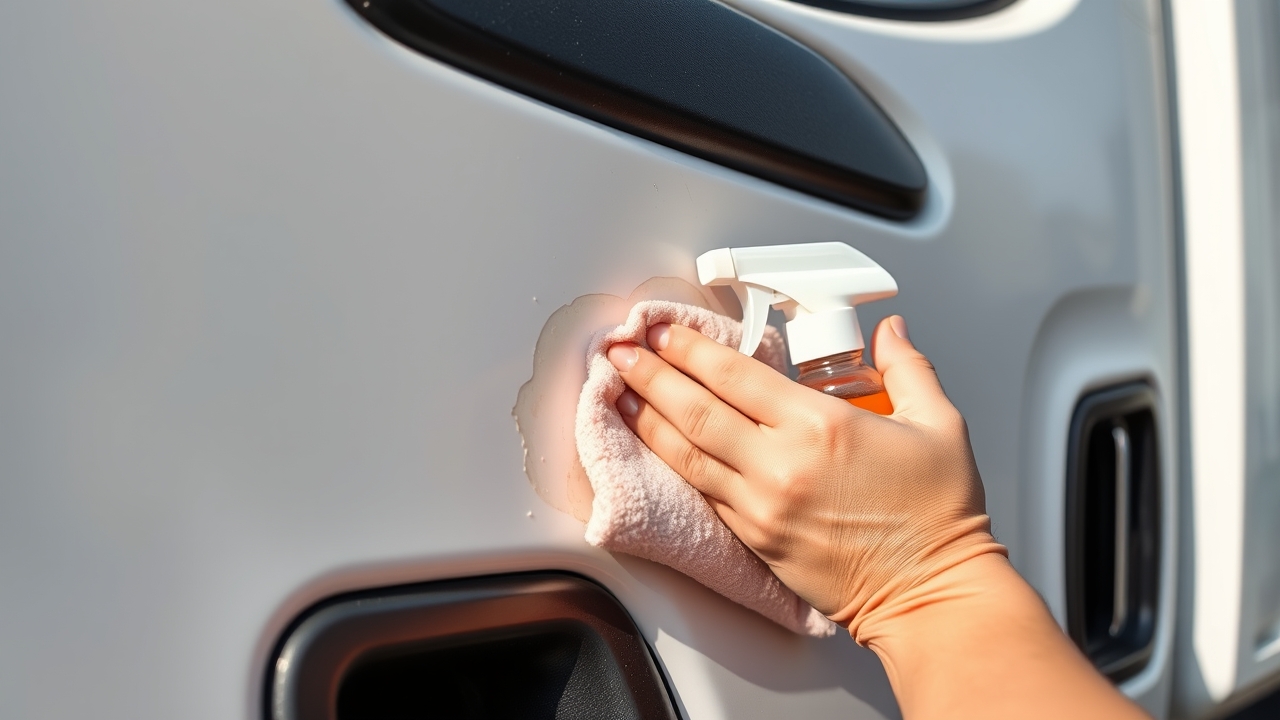
Pulling old vinyl lettering off a truck door is satisfying right up until you see the sticky outline it leaves behind. Adhesive residue removal is a straightforward job when you use the right solvent and technique for the surface. Use the wrong approach and you risk dulling the paint, leaving more mess, or spending an hour on a 10-minute job.
Why Adhesive Residue Stays Behind
Pressure-sensitive acrylic adhesive is designed to flow into surface micro-texture and create a mechanical bond. When vinyl is removed (especially if it has been on a vehicle for several years), the adhesive layer can split, leaving the portion that flowed deepest into the paint surface behind on the vehicle while the bulk pulls away with the film.
Older vinyl leaves more residue than fresh vinyl. Oracal 651 or 3M Scotchcal that has been on a truck for 5 years has a fully cured adhesive layer that grips much harder than vinyl installed 6 months ago. Heat during removal helps, but some residue transfer is almost inevitable on aged installations.
The Ghost Outline Problem
Beyond pure adhesive residue, old lettering often leaves a ghost: a clean rectangle or letter shape where the vinyl was, surrounded by years of oxidation, road grime, and UV fade on the unprotected paint. The vinyl actually preserved that patch of paint. Cleaning the residue reveals this contrast clearly. Removing the ghost usually requires paint correction (polishing), not just solvent cleaning.
Tools and Solvents You Will Need
- Plastic razor blade or 3M Eraser wheel. Never use a metal razor on painted vehicle surfaces.
- Isopropyl alcohol (70 to 91 percent). Safe on most painted and glass surfaces. A good starting solvent.
- Citrus-based adhesive remover (Goo Gone, Turtle Wax Adhesive Remover). Effective on stubborn residue and gentler than petroleum-based solvents.
- Rapid Remover by Rapid Tac. A professional-grade vinyl adhesive remover that works faster than citrus products on stubborn acrylic adhesive.
- Naphtha (lighter fluid) or mineral spirits. More aggressive option for thick residue; requires wax/polish after use because it strips surface protection.
- Microfiber cloths. Lint-free. Do not use paper towels, which can scratch softened paint.
- Heat gun or hair dryer. Warming the residue makes it more pliable and easier to remove mechanically.
Adhesive Residue Removal on Painted Vehicle Surfaces
This is the most common scenario and requires the most care. The goal is to lift the adhesive without disturbing the clear coat.
Step-by-Step Process
- Warm the area. Use a heat gun or hair dryer at medium setting for 15 to 30 seconds. Warm adhesive is much easier to remove than cold, stiff residue.
- Mechanical removal first. If there is a thick layer of residue, use a plastic razor blade at a low angle (20 to 30 degrees) to lift the bulk of it. Do not dig into the paint. Or use a 3M Eraser wheel (a rubber wheel that mounts on a drill) which excels at removing large areas of adhesive without chemicals.
- Apply solvent. Saturate a microfiber cloth with isopropyl alcohol or citrus remover. Do not pour solvent directly on the vehicle surface. Press the cloth against the residue and let it dwell for 30 to 60 seconds.
- Wipe with light pressure. Use back-and-forth strokes, not circular, to avoid creating swirl marks. Re-saturate the cloth as needed.
- Repeat as needed. Thick or old residue may need 2 to 3 applications.
- Clean the area with isopropyl alcohol. After the residue is gone, wipe the area clean to remove solvent residue before applying new vinyl.
- Polish and wax. If you are not immediately re-lettering, apply a polish and wax to restore the clear coat protection that the solvent stripped.
Adhesive Residue on Glass and Mirrors
Glass is more forgiving than painted surfaces. You can use a metal razor blade at a low angle on flat glass (windshield, rear glass) with excellent results. Saturate the area with soapy water or Rapid Remover first so the blade glides rather than scratches.
For curved glass (mirrors, side windows), stick with the plastic blade and solvent approach. Isopropyl alcohol works well on glass and leaves no residue of its own. Citrus removers also work and are safe for glass seals and weather stripping.
After cleaning, glass-specific spray (like Windex or similar) removes any solvent film and restores clarity.
Removing Residue from Plastic Panels and Bumpers
Plastic surfaces are the most vulnerable. Aggressive solvents like acetone or lacquer thinner will craze (frost) plastic immediately. Naphtha can soften some plastic types. Stick to isopropyl alcohol or citrus remover, test in an inconspicuous area first, and avoid prolonged solvent contact.
For textured plastic (bumper covers, fender flares), the 3M Eraser wheel is often the safest option because it is purely mechanical and does not involve solvents at all. Work at low drill speed on plastic to avoid heat friction marks.
Chrome and Polished Metal Surfaces
Chrome is durable but can be scratched easily. Never use abrasive pads or rough cloths on chrome. Isopropyl alcohol works well. For stubborn residue on chrome, Bug and Tar Remover (products like Turtle Wax Bug and Tar) is specifically formulated to dissolve petroleum-based contaminants including adhesive, and it is safe for chrome and clear coat.
After removing adhesive from chrome, polish with a dedicated chrome polish (Mothers Mag is a common choice) to restore shine and prevent tarnishing.
Protecting the Paint During Adhesive Residue Removal
A few common mistakes that cause more damage than the residue itself:
- Metal razor on paint. Metal razors will scratch clear coat. Always use plastic blades on painted surfaces.
- Rubbing dry. Wiping dry residue without solvent creates friction that can leave micro-scratches. Always wet the area first.
- Acetone or lacquer thinner on paint. These are clear coat killers on most automotive finishes. Stick to IPA, citrus removers, or naphtha used briefly.
- Pressure washing the residue. Water pressure does almost nothing to adhesive residue and may drive the remaining adhesive deeper into paint texture.
- Circular wiping motions. These create swirl marks visible in sunlight. Use straight back-and-forth strokes.
| Surface | Safe Solvents | Avoid |
|---|---|---|
| Painted metal | IPA, citrus remover, naphtha (brief) | Acetone, lacquer thinner |
| Glass | IPA, citrus remover, Rapid Remover | Acetone (safe but not needed) |
| Plastic panels | IPA, citrus remover (test first) | Acetone, lacquer thinner, naphtha |
| Chrome | IPA, Bug and Tar Remover | Abrasive cleaners |
| Vinyl wrap | IPA only (diluted to 50%) | Any petroleum solvent |
Frequently Asked Questions
Does Goo Gone damage car paint?
Goo Gone Automotive (the version specifically formulated for vehicles, not the original household version) is safe for use on clear coat when used as directed. Apply with a cloth, let dwell for 60 seconds, then wipe clean. Follow up with isopropyl alcohol to remove any citrus oil residue before applying new vinyl, as the oil can interfere with adhesion.
Can WD-40 remove adhesive residue from a vehicle?
WD-40 does work on adhesive residue and is safe on painted surfaces. It is a light petroleum-based lubricant that dissolves the acrylic adhesive. The downside is that it leaves an oily film that requires thorough cleaning with isopropyl alcohol before new vinyl can be applied. It is a legitimate option when citrus remover or Rapid Remover is not available.
How long does adhesive residue removal take?
A typical truck door letter removal with residue cleanup takes 15 to 30 minutes per door for an experienced person using the right products. A complete vehicle fleet rebrand where all old lettering needs to come off before new installation typically runs 45 to 90 minutes per vehicle depending on how much lettering is being removed and how old it is.
The residue is leaving a faint stain even after I remove it. What is happening?
This is likely the ghost effect described above. The adhesive itself is gone, but the paint where the vinyl lived was protected from UV and weathering for years, making it visibly different from the surrounding paint. This is not a stain from the adhesive. It requires paint polishing to blend the protected and unprotected areas. A light pass with a dual-action polisher and cutting compound usually eliminates it.
Is the 3M Eraser wheel safe for all vehicles?
The 3M Stripe Off Wheel (Eraser Wheel) is safe on most painted surfaces when used correctly. The wheel should spin at 3,500 to 4,500 RPM, and you should keep it moving constantly. Holding it in one spot builds heat friction that can damage clear coat. It is not recommended on flexible or textured plastic panels, or on vinyl wraps. On standard automotive clear coat, it is one of the fastest adhesive removal methods available.
After removing old vinyl, how soon can I apply new lettering?
After adhesive residue removal, wipe the area thoroughly with fresh isopropyl alcohol and let it dry for at least 5 minutes. This removes all solvent and oil residue. New vinyl can go on immediately after that dwell time. Do not apply wax or polish before new vinyl; those will interfere with adhesion the same way road grime does. See our article on how to apply vinyl letters to truck doors for full surface prep steps before re-installation.
Next Steps
Once the old residue is off and the surface is clean, it is time for fresh lettering. Hoosier Decal has cut custom vinyl letters and logos for contractors, fleet managers, and business owners since 2003. All lettering ships from Indiana, cut from Oracal and 3M exterior-rated film. Visit create vinyl lettering to build your new set, or upload your artwork to get a quote on a custom logo.
