
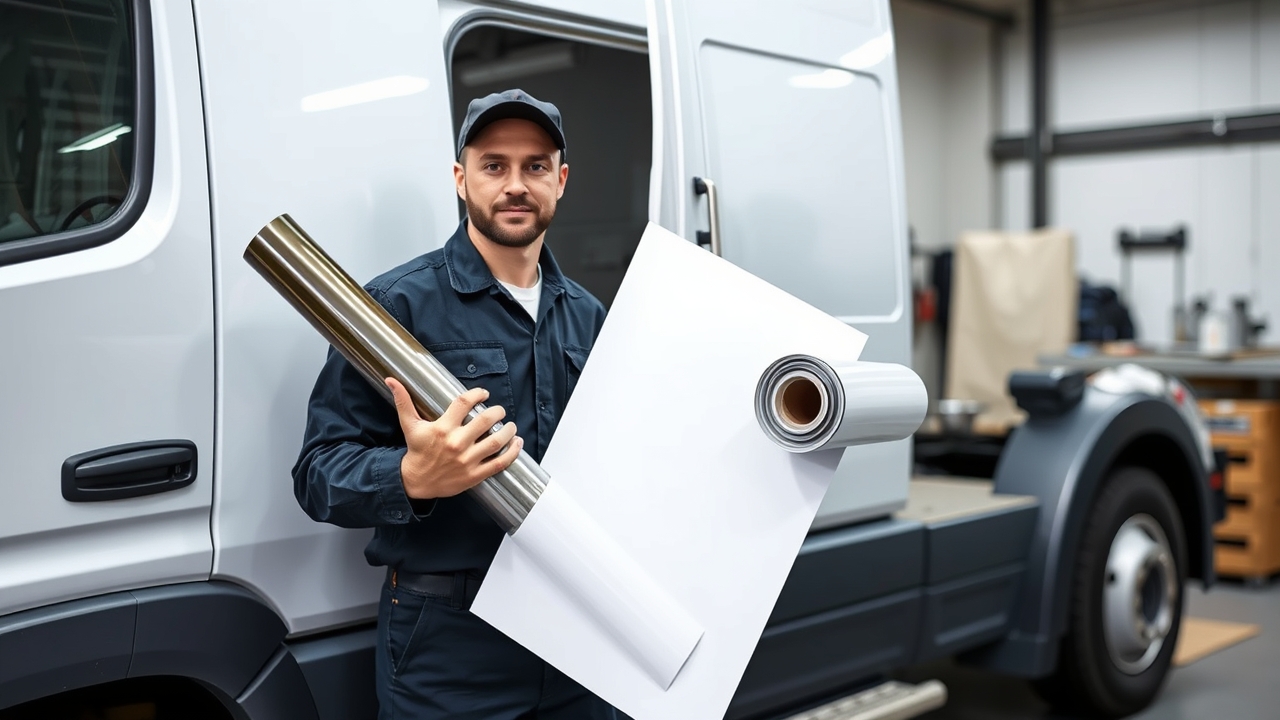
Choosing the right vinyl for your truck isn’t complicated, but getting it wrong is expensive. Wrong film grade on a semi door means peeling at mile 80,000. Wrong finish on a service van looks unprofessional the first time a client sees it. We’ve helped contractors, fleet managers, and owner-operators choose vinyl for truck lettering since 2003. Here’s what actually matters.
How to Choose Vinyl for Your Truck: Start with Surface Type
Not all truck surfaces are the same, and the surface determines which vinyl film will perform. A smooth, flat steel door is straightforward. A fiberglass body panel with compound curves, or an aluminum trailer with exposed rivets, needs a different material entirely.
Flat Steel and Aluminum Doors
This is the most common application for service truck lettering. A flat door with factory or repainted finish works well with Oracal 651 or Oracal 751 intermediate calendered vinyl. Oracal 651 is rated 6 years outdoors; Oracal 751 extends that to 7 years and offers slightly better heat resistance, which matters if your trucks park in full sun across a southern-state summer. Both films use solvent-based acrylic adhesive that pulls cleanly from factory paint without leaving residue, assuming the door wasn’t repainted with a cheap spray can.
Riveted and Textured Panels
Riveted trailer sides, corrugated box truck bodies, and textured fiberglass cabs need a cast vinyl film. Cast films are dimensionally stable and soft enough to conform into surface texture without lifting at the edges. 3M Scotchcal 180C-series cast film handles riveted aluminum trailers reliably. Oracal 970RA wrap series is another option on contoured panels. Budget vinyl on a riveted surface will start lifting at the rivet heads within a season, and once an edge lifts, dirt and moisture accelerate the failure.
Windows and Glass
Glass requires a film rated for UV exposure and with a removable adhesive if window graphics need to come off cleanly. Oracal 8500 translucent film is popular for tinted window lettering. For solid opaque lettering on glass, standard Oracal 651 with permanent adhesive works, though removal requires more effort. Never apply permanent adhesive cast vinyl to a vehicle window you’ll need to remove later without damaging the glass.
Durability Tiers: Matching the Film to the Miles
Vinyl film durability is rated in outdoor years under standard UV exposure. A truck running 120,000 miles a year ages vinyl faster than a vehicle parked in a covered lot. High-UV climates like Arizona and Florida reduce rated life by roughly 20-30%. Choose your durability tier based on how long you actually need the lettering to last, not the cheapest option on the page.
| Film Grade | Example Product | Outdoor Rating | Best For |
|---|---|---|---|
| Economy calendered | Generic monomeric | 2-3 years | Temporary signage, short leases |
| Intermediate calendered | Oracal 651, Oracal 751 | 6-7 years | Service trucks, fleet lettering |
| Cast film | 3M Scotchcal 180C | 10+ years | Long-haul, riveted surfaces, wraps |
Hoosier Decal uses intermediate calendered vinyl as our standard for truck lettering orders. If your application calls for cast film, we quote it. We don’t quietly substitute budget material to win on price.
Choosing Your Finish: Gloss, Matte, or Satin
After you’ve selected the film grade, choose a finish. The finish affects how the lettering looks on your truck, not how long it lasts. All three finishes are available in the same durability tiers.
Gloss
Gloss is the default for a reason: it’s high-contrast and reads clearly from a distance. White gloss lettering on a dark truck shows up at 50 feet. For USDOT numbers, ICC MC numbers, and regulatory lettering, gloss is the standard choice. It’s also the easiest to clean; road grime wipes off a gloss surface with a damp rag.
Matte
Matte lettering has a flat, low-reflectance appearance that some fleet managers prefer for brand consistency with newer vehicle paint programs. If your vehicles use a matte-finish fleet paint, matte vinyl lettering integrates better visually. Matte is slightly harder to clean because the surface texture traps dust. It does not show water spots after rain the way gloss does, which some owners prefer on white vehicles.
Satin
Satin is a middle-ground finish with a subtle sheen, neither flat nor reflective. It’s popular with trades contractors who want a slightly upscale appearance over standard gloss. Our matte vs gloss vinyl finish guide covers real-world comparisons with photos so you can see the differences before you order.
Choosing Vinyl for Your Truck: Compliance Lettering Requirements
If your truck operates in interstate commerce, your vinyl lettering isn’t just branding: it’s a federal requirement. The FMCSA mandates specific size, color contrast, and placement for USDOT numbers, MC numbers, and operating authority. Getting the size wrong is a common and avoidable problem.
We’ve seen owner-operators receive stickers from online vendors that were cut at 1.5-inch letter height when FMCSA requires a minimum 2-inch height for most regulated vehicles. A DOT inspector will write that up at the roadside. Our USDOT decal sizing guide details exactly what size your specific vehicle requires. We also review every compliance lettering order before it goes to the plotter.
Application Tips That Affect Long-Term Performance
You can buy the best vinyl in the market and still have it fail within a year from poor application. Temperature, surface prep, and technique all matter. Here are the factors that actually cause early failures in our experience.
- Temperature: Apply between 60 and 90 degrees F. Cold surfaces reduce adhesive activation; hot surfaces dry the adhesive before it bonds fully. Early morning in summer or midday in spring are ideal.
- Surface cleanliness: Wax, silicone detailers, and road film all reduce adhesion. Clean with isopropyl alcohol (70% or higher) immediately before application, then let it flash dry for 60 seconds.
- New paint cure time: Wait at least 30 days after repainting before applying permanent vinyl. Fresh paint offgasses solvents that prevent adhesive bonding.
- Edge seal: On cut vinyl letters, press firmly around every edge with a squeegee after removing transfer tape. Unsealed edges are where moisture and car wash chemicals enter and cause lifting.
Following these steps is the difference between lettering that lasts five years and lettering that starts lifting at eight months.
Frequently Asked Questions
What vinyl does Hoosier Decal use for standard truck lettering?
Our standard for truck door lettering is Oracal 651 or Oracal 751 intermediate calendered vinyl. Both are 6-7 year rated outdoor films with solvent-based acrylic adhesive. We specify the brand so you know what’s going on your vehicle.
Do I need cast vinyl for my work truck?
Only if your truck has riveted panels, compound-curve surfaces, or fiberglass contours. For standard flat steel doors, intermediate calendered vinyl performs well and costs less. Cast vinyl is worth the premium on textured or curved surfaces where calendered film would lift.
How do I know which finish to choose for my fleet?
Gloss for high-visibility compliance lettering and general use. Matte if your fleet paint program uses matte vehicle paint and you want finish consistency. Satin for a premium appearance without full gloss reflectance. All finishes are available in both calendered and cast films.
Can I apply vinyl in cold weather?
Application below 50 degrees F is not recommended. The adhesive does not activate properly in cold, leading to poor initial bond and early edge lifting. If your truck is garaged, bring it in to reach at least 60 degrees before applying vinyl.
How long should I wait before washing the truck after applying vinyl?
Wait at least 48 hours after application before washing. Give the adhesive time to fully bond before exposing it to water pressure or soap. Avoid automated car washes with stiff brushes for the first week.
What if I need USDOT numbers and branding on the same truck?
That’s the most common order we handle. USDOT and MC numbers go on in white or contrasting vinyl per FMCSA requirements, and company name, phone, and logo lettering are placed separately. We review placement on both sides before cutting so the compliance lettering meets size and visibility requirements.
Next Steps
Ready to choose vinyl for your truck? Use our vinyl lettering builder to configure your order with the right film and finish, or upload your artwork and our Indiana team will review it and get back to you with a quote. USA-made vinyl, shipped fast, backed by real support.
