
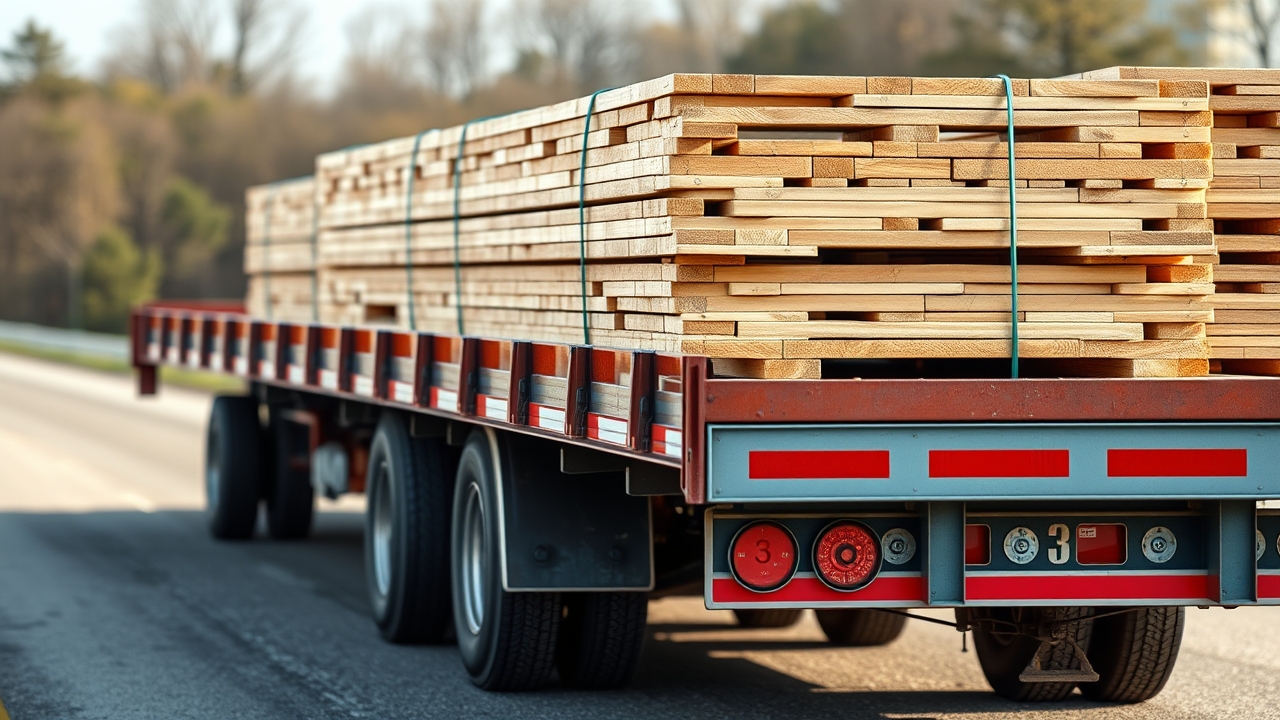
Flatbed trailer lettering presents a unique challenge that closed van and box trailer operators do not face: there is no large side panel to work with. The open platform design that makes flatbeds so versatile leaves precious little flat, accessible surface for the required carrier identification. Hoosier Decal has been cutting flatbed trailer lettering since 2003, and we walk through exactly where to put it, how to size it, and what material survives the outdoor exposure that flatbed operators deal with every load.
FMCSA Marking Requirements for Flatbed Trailers
A flatbed trailer used in interstate commercial service is a commercial motor vehicle under FMCSA definitions, and 49 CFR Part 390.21 requires the same carrier identification as any other trailer type. The required elements are the motor carrier’s legal name, city and state of the principal place of business, USDOT number, and MC number if operating under authority.
The requirements for trailers specifically state that markings must appear on both sides of the vehicle and be legible from 50 feet in daylight with sufficient contrast against the background. The minimum character height is 2 inches.
One distinction for flatbed operators: the regulation references the “vehicle” which, for a trailer, is interpreted as including any structural member or surface that can carry marking. On a flatbed, that narrows the compliant location options compared to a van trailer, but it does not eliminate them. Inspectors are familiar with flatbed configurations and understand the placement constraints.
State-specific requirements on top of the federal baseline vary by state. Our state DOT requirements guide covers what Indiana and neighboring states require for commercial haulers beyond the federal minimum.
Where to Put Flatbed Trailer Lettering
This is the central practical question for flatbed operators. Unlike a van trailer with 8 feet of clean painted panel on each side, a flatbed gives you steel I-beam side rails, cross members, and the platform surface, none of which is ideal for standard adhesive vinyl.
Side Rail (Most Common)
The steel or aluminum I-beam side rail running the length of the trailer is the most common location for flatbed trailer identification. The web of the I-beam (the vertical face between the top and bottom flanges) provides a flat surface for lettering. Typical web height on a standard flatbed is 4-6 inches, which accommodates 2-inch required text with margin.
The challenge: the rail surface is often painted steel with road grit, grease, and rust exposure. The vinyl surface prep requirements are the same, but the maintenance of the application surface is harder than a painted aluminum van trailer. Clean steel with good paint holds vinyl lettering for years; rusted or oil-contaminated rail surface is problematic and the vinyl will not bond reliably.
Toolbox or Headboard Surface
Many flatbeds have a painted steel headboard at the front of the trailer. This gives a relatively clean flat surface for the required identification block, often 12-18 inches tall and 24-36 inches wide. Headboard-mounted identification counts toward the “both sides” requirement only if it is visible from both sides, which a full-width centered headboard generally satisfies.
Tool boxes mounted on the side of the trailer near the front are another option. Painted steel tool box lids and sides provide good vinyl adhesion and keep the required identification at a readable height.
Front Face and Rear Identification
A small number of flatbed operators use the front face of the trailer (visible to following traffic on the tractor) or hang identification placard brackets. These are acceptable supplementary locations but do not independently satisfy the both-sides requirement. The sides are where the regulation requires the markings.
Sizing and Legibility on Flatbed Rail Surfaces
A 4-6 inch I-beam web gives you 2 inches of working height for the required USDOT text at legal minimum sizing. That works but leaves no room for error. Most flatbed operators run the required identification block on a painted section of the rail with the lettering stacked in the tightest possible arrangement:
- Company name: 2 to 2.5 inches (fits a long name in a condensed font)
- City, State: 2 inches
- USDOT number: 2 inches
On a 6-inch web, a three-line block at 2 inches per line with minimal line spacing fits cleanly. Use a condensed bold font (Impact, Franklin Gothic Condensed, or similar) to fit longer company names in the available horizontal space without violating the 2-inch minimum height.
If the headboard or a tool box provides more vertical space, bump the company name to 3-4 inches and give the overall block more breathing room. The 50-foot legibility requirement is easier to achieve at 3 inches than at 2 inches.
Our letter sizing guide covers the visibility calculation that determines how large lettering needs to be at various reading distances.
Vinyl Material Durability on Flatbed Trailers
Flatbed trailers are exposed to conditions that van trailers mostly avoid. Open platforms get direct rain and sun on the cargo area surfaces. Side rails accumulate road spray, grit, and seasonal contamination more than van trailer skirts do. The vinyl needs to handle all of that while bonded to steel that may flex slightly over heavy loads.
Cast vinyl is the required material for flatbed rail applications. Oracal 651 and 3M Scotchcal 50 series are our standard recommendations. Both use aggressive permanent adhesive and are rated for outdoor vertical surface use for 6-8 years. They handle freeze-thaw cycling on northern routes and high UV exposure on southern runs.
For rail surfaces that are slightly textured from corrosion protection coatings or manufacturing processes, a thicker 4-6 mil cast vinyl gets better initial adhesion than standard 2.5-3 mil material. If the rail surface has a powder coat finish, the adhesion is typically excellent. On bare painted steel with some weathering, clean with 70% isopropyl alcohol thoroughly before applying.
Reflective vinyl is worth considering for flatbed operators who regularly haul in work zones or low-light industrial environments. Oracal 5600 series reflective vinyl meets the same character height requirements and adds significant nighttime visibility.
Step Decks and Lowboys
Step deck trailers have a vertical riser panel between the two deck heights, often 10-16 inches tall. This riser is an excellent location for the required identification block since it provides more vertical space than the side rail web. Lowboy trailers have deeper frame rail webs (8-12 inches on heavy models), which accommodates larger text at a more legible size than a standard flatbed rail. The same cast vinyl materials and preparation requirements apply to both configurations.
Frequently Asked Questions
Do I need flatbed trailer lettering if the trailer is registered to a farm?
Farm vehicles hauling the farm’s own agricultural products are generally exempt from FMCSA commercial vehicle marking requirements under the agricultural exemption. If the flatbed is also used for commercial hauling (moving cargo for hire or transporting goods across state lines in non-agricultural commerce), the exemption does not apply for those commercial trips. Many farm operators who do occasional commercial hauling use magnetic identification signs that go on for commercial loads and come off for farm use.
Can I use a placard board instead of adhesive vinyl on the rail?
Yes. Some flatbed operators use painted or printed aluminum placard boards mounted to the rail rather than adhesive vinyl. The placard must still meet the 2-inch minimum height and contrast requirements. Aluminum sign blanks with screen-printed or vinyl-applied text are an alternative that works well on rough rail surfaces where adhesive vinyl adhesion is questionable. They mount with self-tapping screws or rivets and can be swapped when carrier information changes.
What happens at a weigh station if my flatbed identification is not visible?
A weigh station officer who cannot read the required identification markings on a flatbed can place the vehicle out-of-service until compliant markings are obtained. The officer understands flatbed constraints but expects the markings to be somewhere on both sides of the trailer. An out-of-service order at a scale house delays your load and generates a violation on your carrier record. Correct identification before the trailer leaves your yard is far less expensive.
How do I apply vinyl to a painted steel I-beam rail?
Clean with degreaser, then wipe with 70% isopropyl alcohol and let dry. Apply the transfer-taped letter set using dry application technique, squeegeeing firmly from center outward. Running a heat gun over the surface after application helps the adhesive flow into any surface texture on steel rail. See our linked application guide for the full step-by-step process.
Do I need lettering on both sides of a flatbed trailer?
Yes. FMCSA requires both sides. If you use the headboard as the primary location, confirm it satisfies the both-sides visibility requirement (a centered headboard visible from both sides of the trailer typically does). If not, apply matching identification blocks on both the driver and passenger side rails. We produce matching sets for flatbed operators as a standard offering.
Next Steps
Get your flatbed trailer lettered and inspection-ready. Use our vinyl lettering configurator to set up your carrier identification block, or send us your layout for a custom quote on a set tailored to your trailer configuration. We cut in Indiana, ship nationwide, and back every order with over two decades of commercial vehicle lettering experience.
