
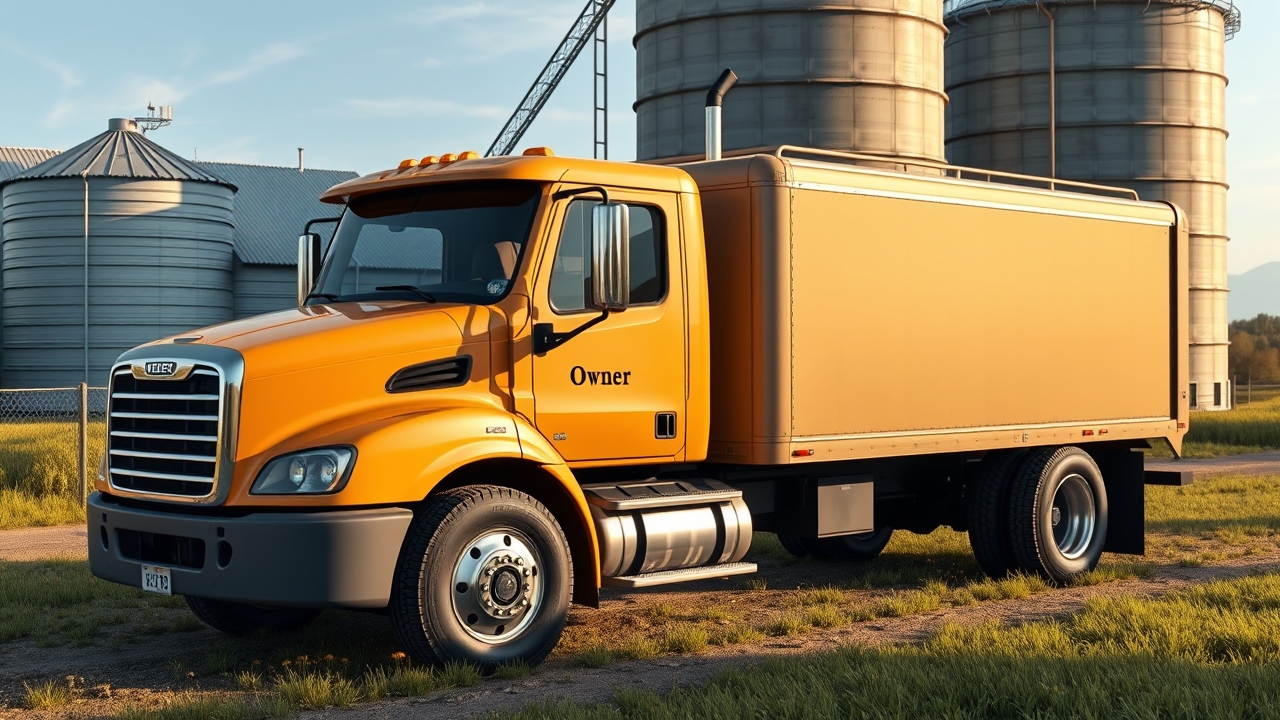
Agricultural vehicle exemptions from federal trucking regulations are real, but they are narrower than many farm operators assume. A grain truck hauling corn from a rented field to a co-op elevator 200 miles away is not automatically exempt just because it is farm-owned. The distance, the ownership of the cargo, and the nature of the operation all matter when determining whether FMCSA marking requirements apply.
What Qualifies as an Agricultural Exemption Under Federal Law
The federal agricultural exemption from FMCSA Hours of Service and certain registration requirements is found in 49 CFR Part 395.1(k) for HOS and in separate provisions under 49 USC 13506 for economic regulations. The exemption does not eliminate all federal requirements. It primarily covers HOS rules and certain registration and operating authority requirements for specific types of hauls.
For the exemption to apply, the vehicle must be transporting agricultural commodities from the source of production to the first point of sale or first place of processing, or transporting farm supplies for agricultural purposes from a wholesale or retail distributor to a farm or ranch.
The cargo must be an agricultural commodity: crops, livestock, fish, or any commodity in an unprocessed or raw state that is used in producing food or fiber. Processed grain, packaged fertilizer on a commercial delivery route, or farm equipment parts shipped from a warehouse typically do not qualify for the agricultural commodity exemption.
Key Qualifications at a Glance
- Vehicle is transporting raw agricultural commodities from the farm to the first point of processing or sale
- Transport occurs within 150 air miles of the farm of origin
- Operator is the farmer, family member, or an employee hauling the farmer’s own crops
- Vehicle is not used for commercial for-hire hauling of third-party freight
Distance Limits: The 150-Mile Rule
The agricultural HOS exemption applies within a 150-air-mile radius from the farm or ranch where the commodities are produced. Air miles, not road miles. An elevator that is 130 air miles away but 175 road miles by highway route still falls within the exemption zone.
This distinction matters for Indiana grain farmers. A farm in Tipton County hauling to a terminal elevator in Indianapolis sits roughly 50 air miles from the origin. That same farmer hauling to a barge terminal in Mount Vernon, 200 air miles to the southwest, falls outside the exemption and is subject to standard FMCSA requirements.
Track your regular haul destinations. If your routes occasionally exceed 150 air miles, your vehicle needs to be in full federal compliance for those trips, which includes proper USDOT markings and an Hours of Service log. The exemption does not partially apply on a trip that exceeds the radius.
Vehicle Types and the Agricultural Exemption
The agricultural exemption applies to motor vehicles used to transport qualifying commodities, not to a specific vehicle class. A grain truck with a GVWR of 80,000 lbs qualifies for the HOS exemption when running qualifying farm hauls within 150 miles. A smaller pickup pulling a trailer qualifies the same way.
What changes the analysis is the use of the vehicle, not its size. A truck that hauls farm grain on Mondays and for-hire freight on Tuesdays is a commercial motor vehicle on Tuesday. Many farmers who also do custom hauling or contract grain cartage for neighbors fall outside the exemption on those jobs even if they use the same truck they use for their own farm hauls.
Fertilizer and Input Delivery Vehicles
A farmer driving to a co-op to pick up seed or fertilizer and hauling it back to the farm is typically within the exemption for farm supply transport. A co-op employee making deliveries to multiple farms is generally not, because that driver is employed by a commercial entity making retail deliveries, not a farmer transporting their own supplies.
When the Agricultural Exemption Does Not Apply
Several common scenarios look like qualifying farm hauls but are not:
- Contract hauling for neighbors: If you are paid to haul another farmer’s grain, you are providing for-hire transportation and the exemption does not cover that work.
- Beyond 150 air miles: Any haul exceeding the radius requires full compliance, including USDOT markings and HOS logs.
- Livestock to auction more than once: FMCSA guidance has historically treated livestock hauling to sale barns as commercial activity rather than farm-to-first-point-of-sale transport.
- Processed commodities: Corn meal, packaged soybeans, or processed specialty crops are no longer raw agricultural commodities for exemption purposes.
- Hired drivers without agricultural ties: The exemption’s application to employed drivers is narrower and fact-specific.
State-Level Agricultural Vehicle Rules
States layer their own exemptions and requirements on top of the federal framework, and they vary substantially. Indiana has its own provisions for farm-plated vehicles and farm-registered trucks that affect registration requirements, weight limits, and permitted route restrictions.
A farm-plated vehicle in Indiana is typically restricted to roads within a certain radius and may not operate on interstate highways during peak hours without a special permit. Farm plates are lower cost than commercial registration but come with use restrictions that many operators overlook until they are stopped at a weigh station.
Ohio, Illinois, and Michigan each have their own versions of agricultural exemptions from state-level motor carrier registration. If your operation crosses state lines, check the rules in each state where you regularly operate. What Indiana allows, the adjacent state may not.
When Farm Trucks Still Need Vinyl Lettering
Even farm vehicles that qualify for agricultural exemptions often benefit from owner identification on the door. While the exemption may relieve the operator from USDOT marking requirements on qualifying hauls, some farm trucks are also used for commercial trips where the exemption does not apply.
Rather than swapping lettering between uses, many operators keep a full compliance set on the truck year-round. The cost of a DOT lettering set is minimal compared to the cost of a marking violation on a non-exempt trip.
Owner identification lettering (company name, farm name, phone number) also helps when tractors, implements, or trailers are left roadside. A visible phone number on a broken-down grain cart tells a passing motorist who to call, which saves time and helps neighboring farmers coordinate in harvest season.
Our USDOT compliance lettering guide at USDOT requirements for Indiana covers exactly what markings Indiana-based agricultural operators need when their trips fall outside the exemption window.
For farm vehicles that operate beyond the radius occasionally, the simplest solution is maintaining full-compliance lettering permanently. Our DOT number and carrier name sets apply to any painted surface and can be removed cleanly if the vehicle changes registration. See our vinyl letter application guide for installation tips specific to older truck doors with irregular surfaces.
| Farm Vehicle Scenario | Federal Exemption Status | Lettering Needed? |
|---|---|---|
| Own grain, own truck, within 150 air miles | Likely exempt (HOS and some FMCSA rules) | Optional but recommended |
| Own grain, own truck, beyond 150 air miles | Not exempt | Yes, full FMCSA markings |
| Hauling neighbor’s grain for pay | Not exempt | Yes, full FMCSA markings |
| Farm supply pickup for own operation | Likely exempt | Optional |
| Custom hire operator | Not exempt | Yes, full FMCSA markings |
Frequently Asked Questions
Does a farm-plated truck need a USDOT number?
A farm-plated truck used exclusively for qualifying agricultural transport within the exemption may not require a USDOT number under federal law. However, if that truck operates on trips that fall outside the exemption (beyond 150 miles, for-hire hauling, etc.), it needs a USDOT number for those trips. Maintaining a USDOT number on a farm truck used for any commercial activity is the practical choice that avoids the compliance question.
Do migrant farm labor transport vehicles qualify for the agricultural exemption?
No. Farm labor transport is not agricultural commodity transport. Vehicles used to transport workers are subject to separate regulations and do not qualify for the agricultural HOS or marking exemptions that apply to commodity hauling.
What counts as the first point of sale for grain?
The first point of sale is typically the first facility that purchases the commodity: a local elevator, a grain merchandiser, or a feed mill. Hauling grain from the farm to a local elevator where it is sold and stored qualifies. Hauling the same grain from that elevator to a river terminal for barge loading is a commercial haul by the elevator, not a farm haul.
Can a farm LLC qualify for the agricultural exemption?
Yes, if the LLC operates as a genuine farming operation. The ownership structure (LLC, corporation, sole proprietor) does not disqualify the exemption if the actual activity meets the qualifying criteria. Custom hire operations structured as LLCs that haul for multiple clients are a different matter and generally do not qualify.
Is there a seasonal aspect to the agricultural exemption?
The exemption is not limited to a specific season, but the HOS exemption during planting and harvest periods has historically received additional enforcement attention. FMCSA has issued seasonal guidance clarifying that operators in the agricultural HOS exemption during peak seasons should still maintain basic safety practices even without a formal log requirement.
Does Indiana have its own agricultural vehicle exemptions beyond the federal rules?
Yes. Indiana has state-specific provisions for farm-registered vehicles covering registration fees, weight limits, and permitted routes. These state rules interact with but are separate from the federal agricultural exemption framework. The Indiana Department of Revenue and the Indiana State Police Motor Carrier Division are the authoritative sources for the current state-level rules.
Next Steps
If your farm operation includes trips that fall outside the agricultural exemption, or if you want to maintain compliance lettering year-round to cover all scenarios, order a DOT compliance set at our vinyl lettering builder. For farm name and phone number lettering that works for non-commercial identification, the same tool handles those custom text orders. Upload your farm logo or existing design at upload-artwork and we will produce it on durable cast vinyl rated for outdoor use.
