
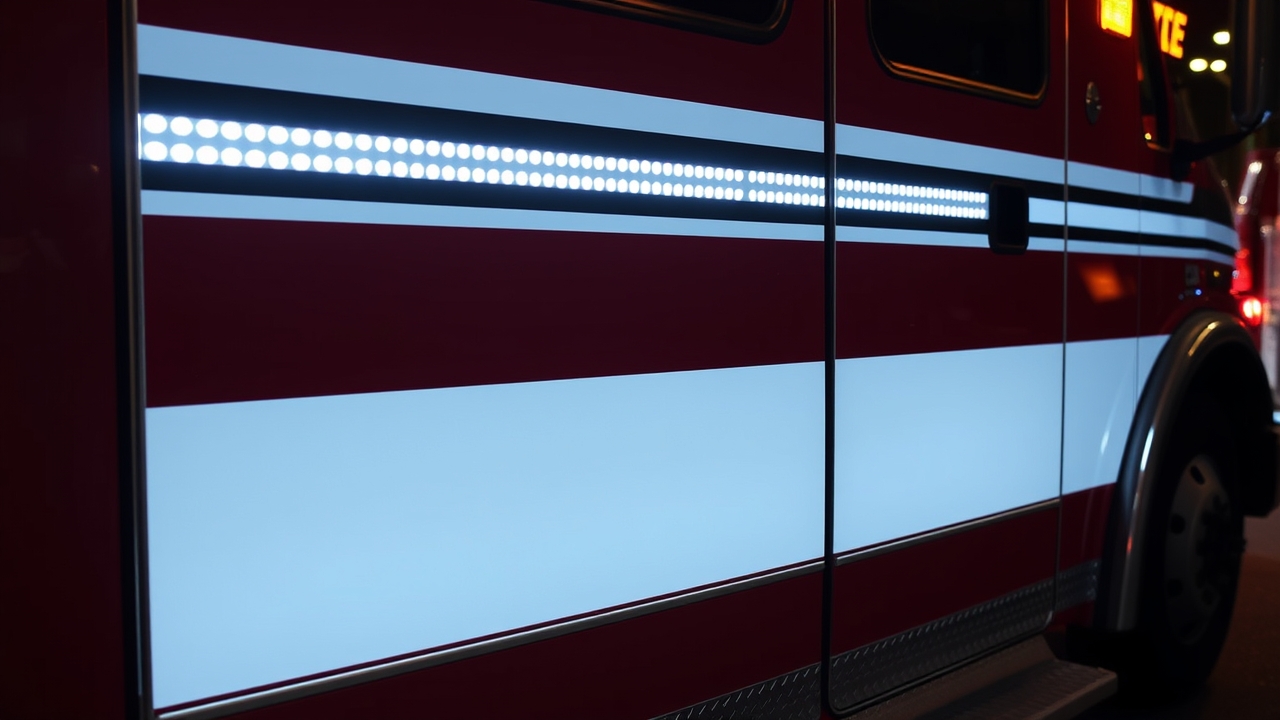
Reflective vinyl returns light directly toward its source, which is why a car’s headlights make a reflective-striped trailer visible from 1,000 feet or more on a dark highway. The same physics that protects truck drivers applies to emergency vehicles, construction equipment, mailboxes, and any surface that needs to be seen when ambient light is low. Knowing when to spec reflective vinyl versus standard film is a practical safety and compliance question with real financial consequences if you get it wrong.
How Reflective Vinyl Works
Standard vinyl has pigmented color. It absorbs most light and reflects some back in all directions, which is why it is visible in daylight but unremarkable at night. Reflective vinyl contains tiny glass beads or micro-prismatic structures embedded in or beneath the face film. These structures return light back toward the light source at very high efficiency.
The two main technologies produce different results. Glass bead retroreflective film (the older technology) returns roughly 50 to 200 candela per lux per square meter, depending on grade. Micro-prismatic reflective film (the newer technology used in traffic signs and high-visibility safety vests) returns 250 to 1,000 or more, depending on the observation angle and grade. The difference in nighttime visibility between the two technologies is visible to the naked eye at highway distances.
Both types are available as pressure-sensitive vinyl that cuts on a vinyl plotter and applies like standard film. The face materials look matte-silver or bright white in daylight; at night under direct light, they glow.
Types of Reflective Vinyl Film
| Type | Technology | Brightness (cdlx/sqm) | Typical Use |
|---|---|---|---|
| Engineering Grade | Glass bead | 70-100 | Basic safety marking, mailboxes, low-speed zones |
| High Intensity Grade | Encapsulated bead | 250-400 | Highway signs, vehicle conspicuity, fleet marking |
| Diamond Grade / DG3 | Micro-prismatic | 700-1000+ | Traffic signs, emergency vehicles, critical safety |
| Fluorescent Reflective | Bead or prismatic with fluorescent face | Variable + daytime fluorescence | Construction, emergency, high-visibility day and night |
Oracal produces their Series 5400 and 5600 reflective films at the engineering and high-intensity grades respectively. 3M’s Scotchlite 680 and 3930 series cover the same territory. For the highest-performance diamond-grade applications, 3M’s Diamond Grade DG3 and Avery’s T-6500 series are common choices.
Where Reflective Vinyl Is Legally Required
Federal and state regulations mandate reflective conspicuity marking on several vehicle categories. Getting this wrong is not just a safety issue; it is an inspection failure and a liability exposure.
Commercial Trailers over 10,000 lbs GVWR
FMCSA regulations (49 CFR Part 393, Subpart B) require retroreflective sheeting or reflex reflectors on the sides and rear of trailers over 10,000 lbs gross vehicle weight. The rear marking must form a pattern recognizable as a large vehicle from behind. Standard commercial conspicuity tape is typically 2-inch-wide alternating red and silver reflective sheeting applied in a specific pattern.
Emergency Vehicles
NFPA 1901 (Standard for Automotive Fire Apparatus) specifies reflective striping requirements for fire apparatus. Most states follow NFPA standards or have equivalent regulations. Police and EMS vehicles often have similar departmental or state requirements for reflective markings, particularly on doors and rear panels.
School Buses
Federal Motor Vehicle Safety Standard 131 requires retroreflective material on school buses. State requirements vary in specifics but generally mandate reflective markings on sides and rear in yellow or the bus body color.
Construction Equipment
Slow-moving vehicles on public roads are often required under state regulations to display the orange slow-moving vehicle (SMV) triangle and reflective tape on projecting equipment. If your equipment crosses public roads regularly, check your state’s requirements for both the SMV emblem and supplemental reflective marking.
Optional High-Value Uses for Reflective Vinyl
Beyond the regulatory minimums, reflective vinyl adds practical value in several non-required applications.
- Fleet vehicle lettering in high-use night hours: Delivery trucks, utility vehicles, and service vans that operate frequently after dark benefit from reflective name and number lettering. Drivers and pedestrians see the vehicle more clearly.
- Boat registration numbers: Nighttime boaters and water rescue teams benefit from reflective registration numbers on hulls. This is not universally required but is allowed under most state boat registration rules. For a full look at boat number display regulations by state, see our boat number display laws guide.
- Personal vehicles in rural areas: Rural mailboxes, gate posts, and driveway markers with reflective film address numbers significantly improve visibility for emergency responders at night, where address identification delays can be critical.
- Horse trailers and livestock haulers: Livestock trailers often travel at night and stop unexpectedly. Reflective striping on the rear significantly improves following vehicle reaction time.
- Motorcycle fairings and helmets: Aftermarket reflective accents on motorcycles improve conspicuity at night. Unlike full-wrap films, small reflective accent strips do not affect paint and can be positioned to maximize angle coverage from following vehicles.
Applying Reflective Vinyl: Key Differences From Standard Film
Reflective vinyl applies using the same basic techniques as standard film but with a few important variations.
The surface of reflective film is more sensitive to surface preparation than standard vinyl. Oil contamination from bare hands causes adhesion failure and can delaminate the bead layer from the adhesive in glass bead grades. Wear clean gloves or handle by edges, and clean the application surface with isopropyl alcohol immediately before application.
Cut reflective vinyl at slightly lower cutting speeds than standard film. The glass bead or prismatic surface creates more plotter-cutter resistance. Overshooting cuts leave visible marks on the reflective surface. Test your cutter settings on a scrap piece first.
When squeegee-applying reflective film, use moderate pressure. Heavy pressure with a hard squeegee on glass-bead film can crush the beads at the surface, reducing reflectivity in the overworked areas. Use a felt-edge or soft rubber squeegee on reflective film.
Weeding (removing the cut waste) from reflective film takes more care than standard film because the material is stiffer. Work slowly and keep the weeding angle low.
Choosing the Right Reflective Product for Your Project
Match the reflective grade to the application. Engineering grade is sufficient for low-speed environments and decorative applications. High-intensity grade covers most commercial vehicle and fleet applications. Diamond grade is for traffic control devices and emergency vehicles where maximum visibility is a life-safety requirement.
Color selection in reflective film is narrower than standard vinyl. White and yellow are always available; red, orange, green, and blue are common. True black reflective is not physically possible (reflection requires returning light, which black absorbs). Metallics and specialty colors are limited at the reflective film level.
If your application uses reflective elements alongside standard vinyl lettering, the two can coexist on the same vehicle as long as you account for the visual difference in daylight (reflective film looks matte and bright; standard vinyl looks saturated and may be glossy). For advice on finish coordination, our matte vs gloss guide covers finish matching across vinyl types.
Frequently Asked Questions
How long does reflective vinyl last outdoors?
Engineering grade reflective film typically carries a 3 to 5 year outdoor rating. High-intensity grades are rated for 7 to 10 years. Prismatic diamond-grade films are rated for 10 or more years. Actual service life depends on climate, UV exposure, and surface prep quality at application. In high-UV Southern states, expect the lower end of rated ranges.
Can reflective vinyl be used on curved surfaces?
Yes, but conformability is limited compared to standard cast vinyl. Most reflective films are calendered products and do not stretch significantly. On mild curves (like a flat truck door panel), they apply cleanly. On compound curves or tight bends, the film will lift at edges. For curved surfaces requiring reflective properties, pre-contour the design to avoid wrapping sharp curves with the film.
Is reflective vinyl the same as glow-in-the-dark vinyl?
No. Reflective vinyl returns light from an active source (headlights, flashlights) directly back toward that source. It does not emit light on its own in the dark. Glow-in-the-dark vinyl absorbs light during the day and emits it in low-light conditions without an active light source. Both have niche uses but serve completely different purposes.
Can I cut reflective vinyl on a standard vinyl plotter?
Yes, with blade and speed adjustments. Reduce cutting speed by 20 to 30 percent compared to your standard vinyl settings. Increase blade pressure slightly. Test on a scrap piece first. The glass bead or prismatic layer adds resistance that can cause blade skipping at speeds optimized for smooth standard film.
Does Hoosier Decal produce reflective lettering for vehicles?
Yes. We cut reflective vinyl lettering for emergency vehicles, trailers, utility trucks, and custom applications. Contact us with your vehicle type, lettering size, and reflective grade needed. We stock high-intensity grade reflective film in white, yellow, and red for most commercial applications.
What is the difference between reflective tape and reflective vinyl film?
Reflective tape typically refers to pre-cut strips of reflective sheeting sold in fixed widths for conspicuity banding. Reflective vinyl film comes in full rolls and can be cut to custom shapes, letters, and designs on a plotter. Reflective tape is faster for banding trailers and equipment; reflective vinyl film is required for custom lettering, logos, and shaped graphics.
Next Steps
Need reflective lettering or graphics for your vehicle or equipment? Start your design at our vinyl lettering builder and choose reflective in the material options, or upload your artwork for a custom cut quote. Hoosier Decal has been producing vinyl lettering from our Indiana shop since 2003, including reflective grades for emergency services, fleet operators, and commercial vehicles shipping to all 50 states.
