
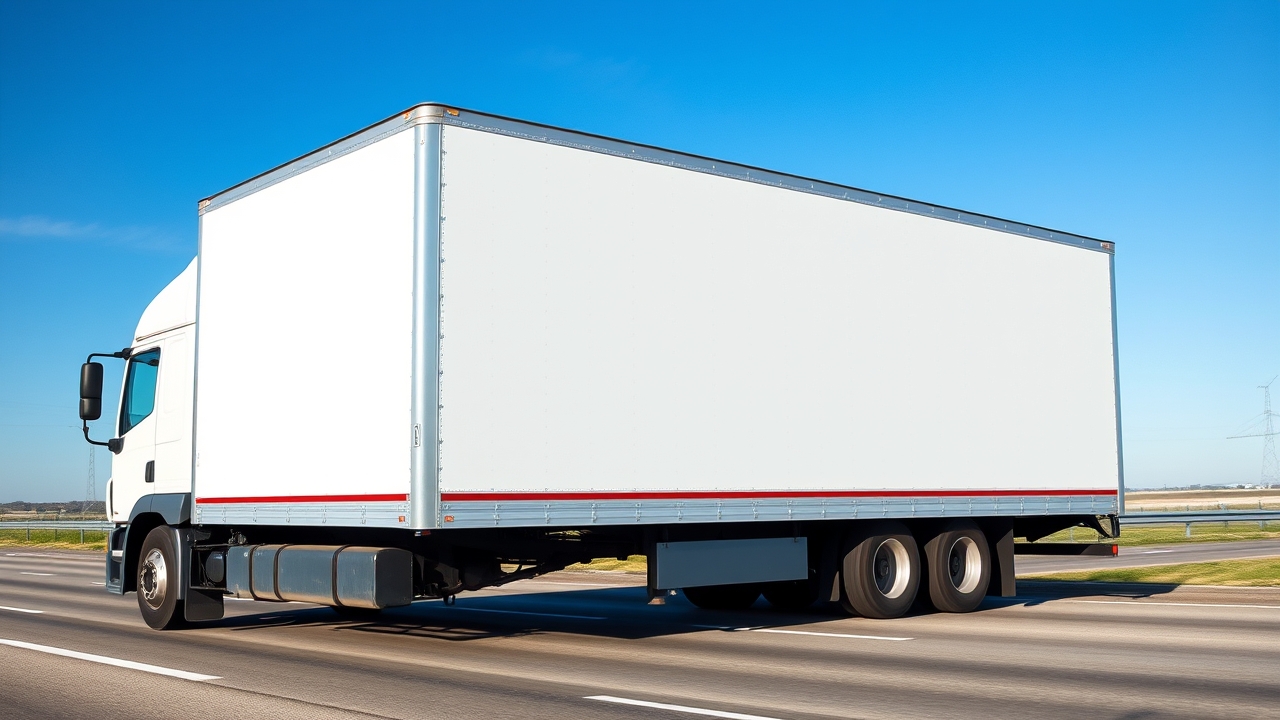
Box truck side lettering gives you one of the largest advertising canvases on the road. A 26-foot box truck with bold vinyl lettering visible from a quarter mile away is an impression machine that pays for itself many times over. Hoosier Decal has been cutting box truck lettering for moving companies, food distributors, contractors, and fleet operators since 2003, and sizing and placement are where most buyers need the most guidance.
Box Truck Side Panel Dimensions by Size Class
Box trucks range from 12-foot cargo bodies on a medium-duty chassis to 26-foot bodies on a Class 6 frame. The usable flat panel area between the wheel wells, nose, and body seams determines how much lettering space you actually have to work with.
| Body Length | Approx. Panel Width | Approx. Panel Height | Usable Area |
|---|---|---|---|
| 12 foot | 108 inches | 60-66 inches | Large |
| 16 foot | 156 inches | 64-70 inches | Very Large |
| 20 foot | 204 inches | 68-72 inches | Extra Large |
| 24 foot | 252 inches | 70-76 inches | Massive |
| 26 foot | 276 inches | 70-78 inches | Massive |
The panel height measurements above account for the floor-level skirt and the top rail. The usable flat area typically starts about 24 inches off the ground (above the frame rail and wheel area) and ends about 6 inches below the top rail. On a 26-foot box with a 78-inch body height, that leaves roughly 48 inches of usable vertical space.
Measure your actual truck. Body configurations, stake-body sides, and custom boxes can vary significantly from the standard numbers above. A tape measure takes 5 minutes and prevents ordering lettering that is 4 inches too tall for your actual panel.
Lettering Size Rules for Maximum Highway Visibility
The rule of thumb for outdoor lettering legibility is roughly 10 feet of readable distance per inch of letter height. A 10-inch letter is readable from about 100 feet. A 20-inch letter is readable from about 200 feet. On a box truck operating on surface streets and highways, your company name should be readable from at least 150-200 feet, which means 15-20 inch characters for the primary name line.
Recommended Heights by Text Line
- Company name (primary): 14 to 24 inches
- Tagline or service type: 6 to 10 inches
- Phone number: 8 to 12 inches
- Website: 5 to 7 inches
- DOT required information: 2 to 3 inches
The enormous panel on a 20-26 foot box truck tempts owners to fill every square foot. Resist that. White space (or body-color space) around your text block makes the lettering easier to read from distance, not harder. Less content, larger characters, more contrast is the formula for effective box truck lettering.
Our letter sizing guide covers the viewing distance formula in detail and applies directly to large-panel applications like box truck sides.
DOT Compliance Lettering on Box Trucks
Box trucks used in interstate commercial transportation are commercial motor vehicles under FMCSA regulations, requiring the same identification markings as tractors and trailers. The required elements under 49 CFR Part 390.21 are the carrier’s legal name, city and state, USDOT number, and MC number (if operating under authority).
Minimum character height for required information is 2 inches, readable from 50 feet in daylight, and contrasting with the background. Required information must appear on both sides of the vehicle.
A common approach on box trucks is to place the required DOT identification block in a discrete location on the lower panel, separate from the large marketing lettering above. This keeps compliance requirements visible without breaking up the main design. Some carriers incorporate the USDOT number into the overall design at a size slightly above minimum for a cleaner look.
State requirements vary and may add permit numbers, state DOT numbers, or weight ratings. Our DOT requirements guide provides state-by-state details for carriers operating across multiple states.
Design Layout Best Practices
Box truck side lettering is most effective when it follows a simple, hierarchical layout. The goal is instant recognition at highway speed.
Single-Side Layout Strategy
Divide the panel into three horizontal zones:
- Upper zone: Company name at maximum practical letter height. This is your primary brand element and should dominate the panel.
- Middle zone: Service descriptor or tagline at 30-40% of the company name height. Tells a viewer what you do.
- Lower zone: Contact information (phone, website) at 50-60% of the company name height. Gives the viewer something to act on.
For a moving company, the layout might be: “ACME MOVING” at 18 inches, “Local and Long Distance Since 1995” at 7 inches, “(317) 555-0100” at 10 inches. Everything reads in one downward scan.
Logo Placement
Logos work best on box truck sides when they are placed at one end of the text block rather than centered among text. A logo at the left or right end of the panel with text running adjacent reads more cleanly than centering a logo with text above and below. If the logo is complex, consider a simplified single-color version for vehicle application.
Material Selection for Box Truck Lettering
Box trucks live outside. They sit on urban loading docks in summer heat, park in exposed lots through Midwestern winters, and take regular power washing at distribution centers. The vinyl needs to hold up through all of that without fading, cracking, or lifting at edges.
Oracal 651 and 3M Scotchcal 50 series are our standard materials for box truck lettering. Both are cast vinyl rated for 6-8 years on exterior vertical surfaces. They survive pressure washing, UV exposure, and temperature cycling without degrading. Cheaper calendered vinyl has a shorter rated life and is significantly more prone to shrinkage on large flat panels, which is exactly where box truck lettering lives.
For finish selection on a white box truck, high-contrast colors (black, dark blue, red, dark green) in gloss finish are the most readable. Matte finish is an option but requires more frequent cleaning to look sharp on a working truck. Our matte vs. gloss guide helps you choose the right finish for your application and maintenance habits.
Frequently Asked Questions
How do I measure my box truck panel for ordering?
Measure the flat area between the wheel wells (front to rear), and then the flat area from the lower frame rail to the top body rail. Note any body creases, riveted seam lines, doors, or vents that break up the usable flat area. Sketch the panel with measurements and share it when you order. We will work with your actual dimensions to spec the layout correctly before cutting anything.
Can box truck lettering be applied over riveted aluminum panels?
Rivet lines are common on older aluminum box bodies. Lettering can be applied over rivet-free areas between the lines, but applying directly over rows of rivets creates bumps in the lettering that look unprofessional and reduce adhesion at those points. Design the layout to avoid running long text lines over rivet rows, or opt for a full vinyl panel application over a riveted section rather than cut letters.
How long does it take to apply box truck lettering?
A simple two-line text set on one side of a 16-foot truck takes an experienced person about 45 minutes per side. A full layout with a logo, three text lines, and contact info may take 2-3 hours per side. We include application tape so each element transfers as a single piece. The time investment is manageable for a careful first-time applicator following our application instructions.
What is the difference between cut vinyl lettering and a printed wrap for box trucks?
Cut vinyl lettering is individual letters and shapes cut from colored vinyl film. It is cost-effective, extremely durable, and easy to replace individual elements. A printed wrap is a full-surface printed graphic on vinyl film that covers the entire body. Wraps offer full photographic imagery and color gradients but cost significantly more and require professional installation. For most commercial operators focused on identification and branding at a practical budget, cut vinyl lettering is the right choice.
Can I get the same design applied to multiple box trucks?
Yes. Fleet orders are one of our most common request types. We cut all trucks in a fleet from the same digital file, so every truck is identical. Fleet pricing on 3 or more vehicles provides a per-unit discount. Just specify the fleet quantity when ordering and we will quote the full set.
Will box truck lettering survive automatic truck washes?
Touchless automatic washes are fine for cast vinyl lettering. Brush washes put more mechanical stress on edges and corners, particularly large-format letters. If your trucks go through brush washes regularly, applying a vinyl-compatible wax or sealant over the lettering after installation extends the edge adhesion. Lettering that has had 48-72 hours to fully cure before the first wash also holds up significantly better than freshly applied vinyl.
Next Steps
Ready to put your company name on one of the most visible advertising surfaces on the road? Build your box truck side lettering using our lettering configurator, or upload your artwork file for a custom layout. We cut everything in Indiana, ship in days, and back every order with two decades of commercial truck lettering experience.
